Equipo
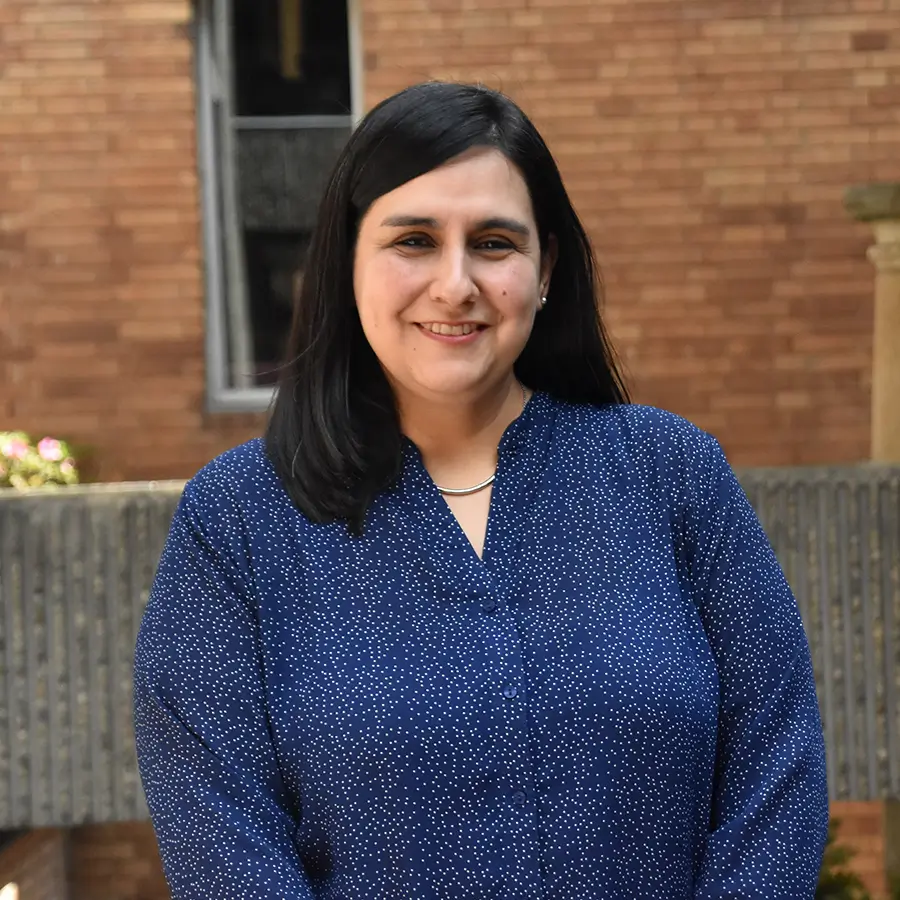
Angelica Vargas
Consultant
Psychologist from the Universidad Nacional de Colombia, Specialist in Occupational Hygiene and Health from the Universidad Distrital Francisco José de Caldas, and Magíster in Public Health from the Universidad El Bosque. She is a Research Professor at the Instituto de Salud Pública of the Pontificia Universidad Javeriana. Her professional experience includes advisory, consultancy, research, and teaching in the areas of occupational health, workplace psychosocial factors, and mental health.
She has coordinated national-level technical development projects for the Ministerio de Trabajo (Colombian Ministry of Labor), focusing on occupational health and safety and psychosocial risk factors. These projects include the Battery of Instruments for the Assessment of Psychosocial Risk Factors and the Guidelines and Protocols for the Promotion and Intervention of Psychosocial Factors and Their Effects on the Working Population. She has also collaborated with the Ministerio de Salud y Protección Social (Colombian Ministry of Health and Social Protection) on mental health initiatives, including developing the Guidelines for Strengthening Teleorientation in Mental Health. Her research focuses on mental health among migrants and populations affected by armed conflict.
Artículos y noticias

Bogotá to Host the VIII International Congress on Health Systems
On May 6 and 7, 2026, Bogotá will host the VIII International Congress on Health Systems, an academic and policy dialogue space that will bring together researchers, health professionals, public...

2025 Global Conference on Climate and Health
The 2025 Global Conference on Climate and Health will take place in Brasília, Brazil from 29 to 31 July 2025, hosted by the Government of Brazil, the World Health Organization (WHO), and the...
Se inauguró Climas Hub, el centro regional que une ciencia y comunidad frente al cambio climático y la salud
El 7 de abril, la Pontificia Universidad Javeriana fue escenario del lanzamiento oficial del Climas Hub, un centro regional de investigación enfocado en la intersección entre cambio climático y...